
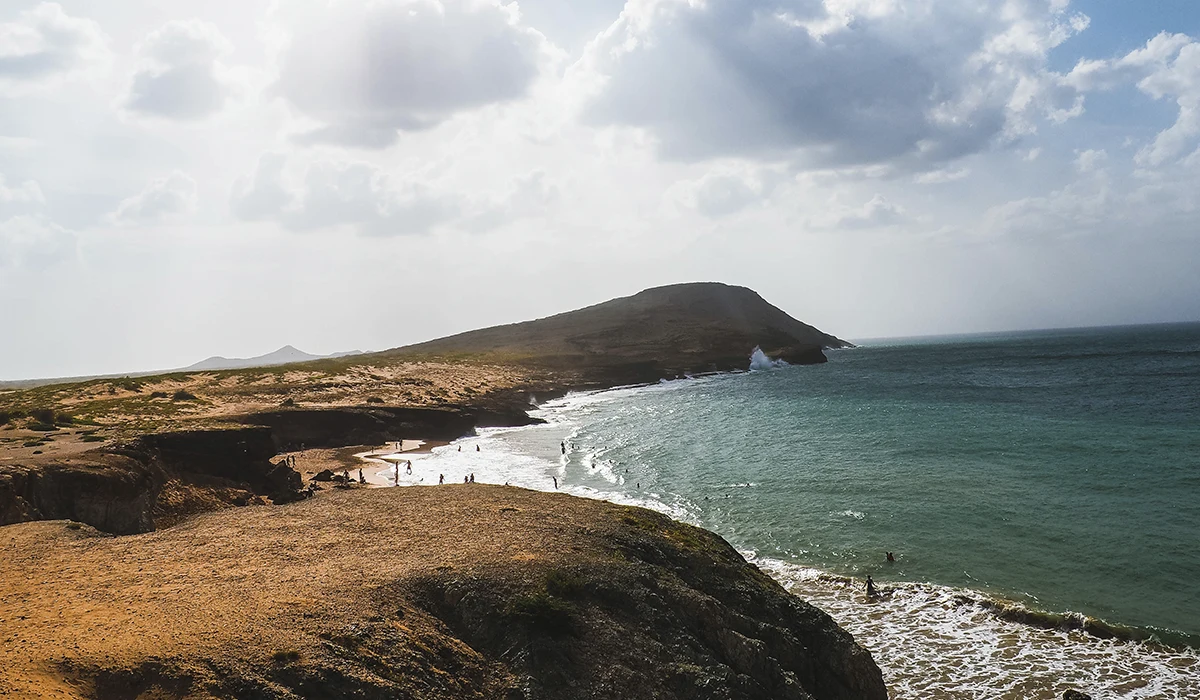
La Guajira is a destination located at the northern tip of Colombia, within the Caribbean region, and stands out as one of the country’s most picturesque territories. Its geography combines arid deserts, beaches open to the Caribbean Sea, mountainous areas, and coastal ecosystems, creating landscapes that are not repeated in any other Colombian region.
This territory is also the ancestral home of the Wayuu people, whose culture, traditions, and way of relating to nature continue to define the identity of La Guajira. Their weaving, worldview, and social organization are an integral part of the traveler’s experience, making every journey a genuine encounter with a living culture.
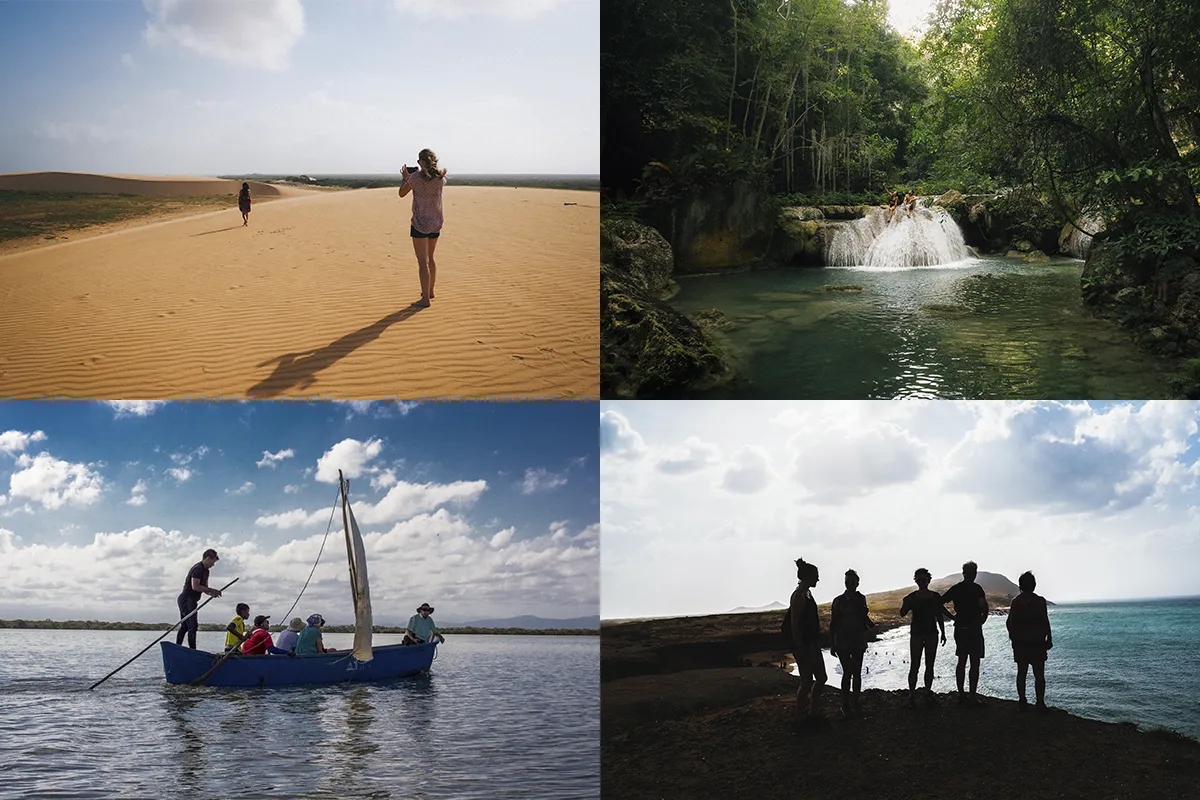
Exploring the tourist sites of La Guajira means visiting iconic destinations like Riohacha, Montes de Oca, Cabo de la Vela, Punta Gallinas, the Manaure Salt Flats, and Mayapo beaches, among many others. Each place offers a different experience, whether through contemplating extreme landscapes, adventuring on off-the-beaten-path routes, or direct contact with local communities.
La Guajira has established itself as an ideal destination for travelers seeking nature, adventure, and cultural experiences away from traditional tourism. Here, the sea meets the desert, the silence of the landscape contrasts with the force of the wind, and ancestral culture coexists with surprising biodiversity, making this territory a place to be experienced with all the senses.
La Guajira is home to must-see tourist sites that reflect the essence of its landscape and culture. From natural sanctuaries inhabited by migratory birds to quiet beaches, open deserts, and unique geographical points in South America, each destination represents a different facet of the department.
Below are the main tourist sites in La Guajira, places that help explain why this territory has become one of Colombia’s most authentic and fascinating destinations for lovers of nature, adventure, and ancestral culture.
Located in the district of Camarones, the Los Flamencos Flora and Fauna Sanctuary is one of the most representative protected ecosystems on the Colombian Caribbean coast and one of the main natural tourist sites in La Guajira. This destination is characterized by a system of coastal lagoons, mangroves, and transition zones between the sea and the desert, making it a key refuge for the region’s biodiversity and for birdwatching activities.
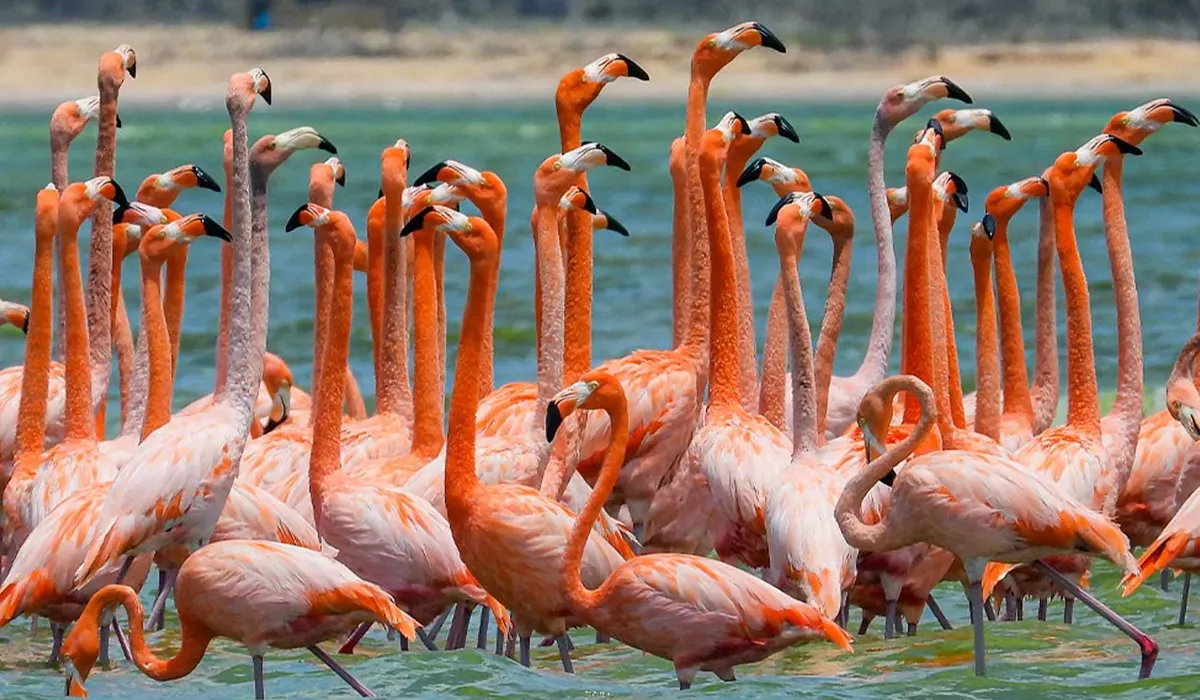
Its main attraction is the pink flamingos, which use these lagoons as a feeding and resting area, especially at certain times of the year. Additionally, the sanctuary is home to numerous endemic and migratory bird species, as well as fish, crustaceans, and flora adapted to saline conditions, positioning it as a strategic site for environmental conservation.
Los Flamencos National Natural Park is ideal for activities such as birdwatching, nature photography, and ecotourism, offering a peaceful and educational experience in direct contact with the natural environment. Visits are generally conducted with local guides, many of whom belong to Wayuu communities, providing a cultural and environmental perspective of the territory and explaining the ancestral relationship between the community and this ecosystem.
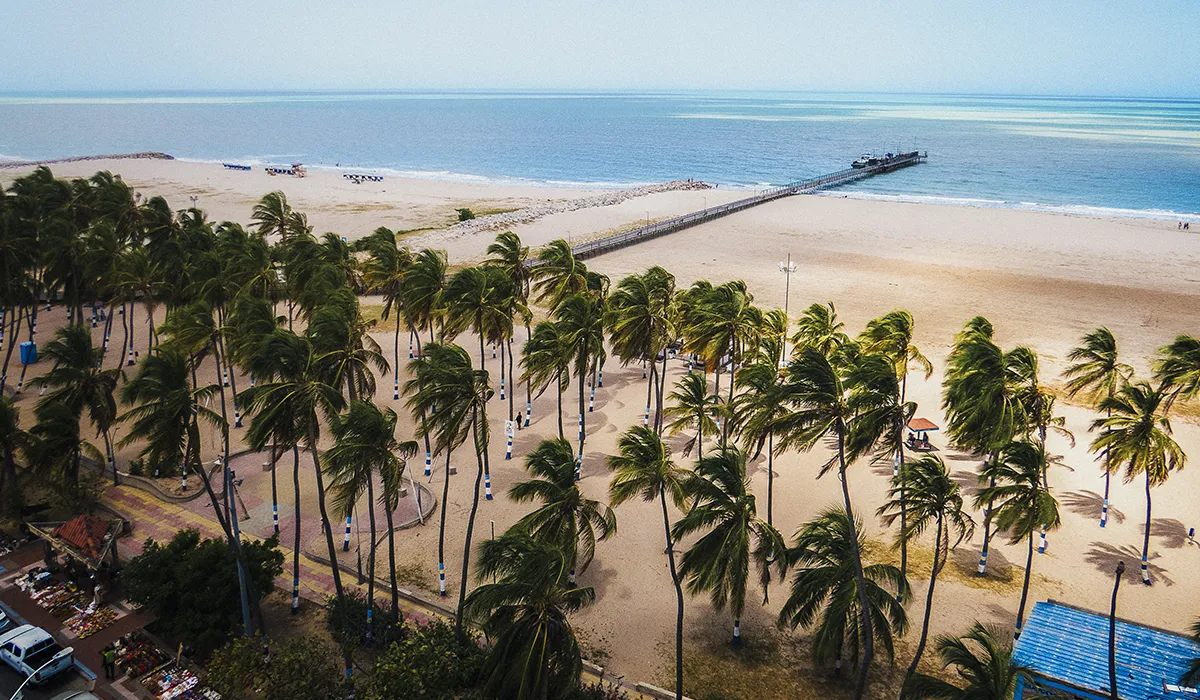
Riohacha, the capital of the department of La Guajira, is the main gateway to this region of northern Colombia, situated on the shores of the Caribbean Sea; the city naturally integrates its history, culture, and coastal environment, giving travelers their first glimpse into the Guajira identity.
One of its biggest attractions is the Riohacha boardwalk, an open space facing the sea ideal for sunset walks, exploring craft shops, and encountering the typical gastronomy of La Guajira, where Caribbean flavors and the region’s traditional cuisine stand out. From this point, you can enjoy wide views of the coastline and a peaceful urban environment, quite different from other more crowded coastal destinations.
Riohacha also plays an important role as a cultural center, as it allows for a close look at the presence and influence of the Wayuu people in the department’s daily life. Craft markets, local fairs, and cultural spaces showcase their weaving, symbols, and worldview, which are fundamental to understanding the history and identity of La Guajira.
Additionally, the city serves as a strategic logistics base for exploring other tourist sites in La Guajira, such as the Los Flamencos Flora and Fauna Sanctuary, the Manaure Salt Flats, Cabo de la Vela, and Punta Gallinas. Its range of accommodation, transport, and tourist services makes it an ideal starting point for those who wish to tour the department in an organized and safe way.
Montes de Oca is one of the most authentic and least explored territories in La Guajira, a destination that stands out for offering a rare natural contrast within the department. Its main attraction is a river with green tones, whose crystal-clear and calm waters flow through the mountainous landscape, creating a setting of small natural waterfalls.
This area, located between Maicao and Albania, presents a different environment, with denser vegetation, a cooler climate, and remnants of tropical forest, becoming one of the few places in the department where forest ecosystems are still preserved. The river, fed by springs and seasonal streams, is the axis that gives life to the territory and sustains local biodiversity.
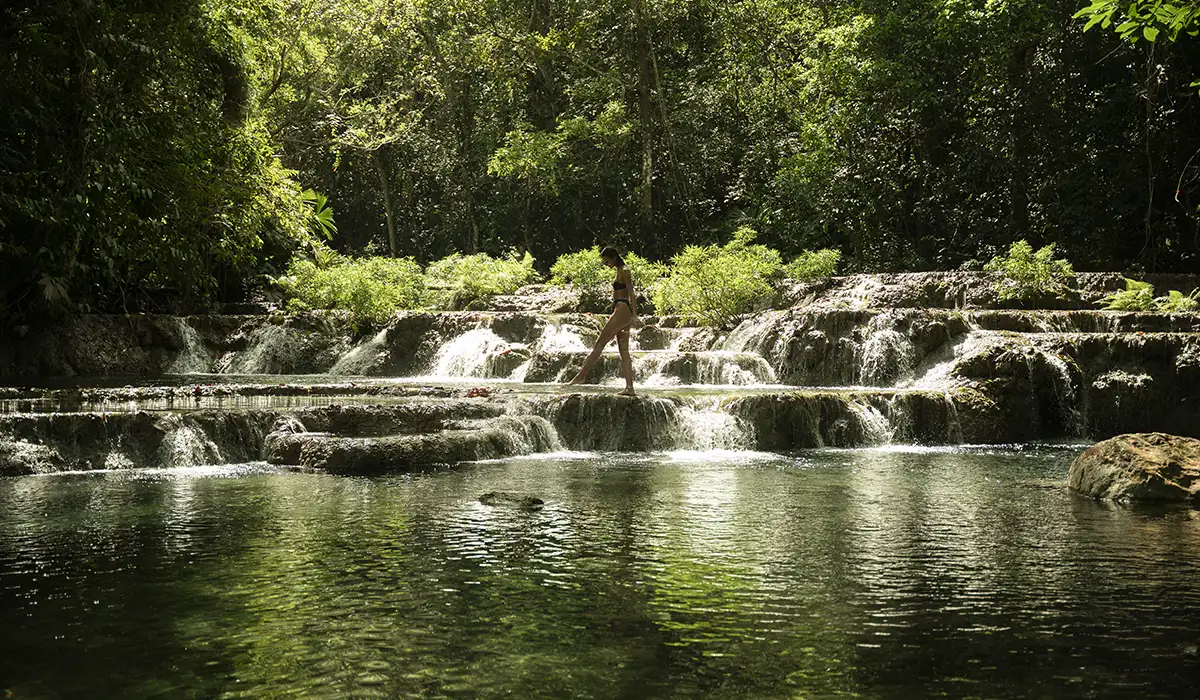
The Montes de Oca Reserve is marked by hills, natural trails, and open landscapes that reflect the historical adaptation of indigenous and peasant communities to a demanding environment. Traveling through this territory allows for an understanding of the relationship between humans and nature in extreme conditions, as well as the discovery of a little-known side of northern Colombia.
This destination is ideal for those seeking community tourism, ecotourism, and cultural experiences away from traditional routes. Guided hikes allow visitors to appreciate the flow of the river and its natural pools, as well as observe flora and fauna typical of the dry forest and transition zones, such as ceiba trees, endemic birds, iguanas, and medicinal plant species, along with natural viewpoints that offer unique views of the Guajira landscape.
The Manaure Salt Flats are one of the most picturesque cultural landscapes in La Guajira, a territory where the desert, the sea, and the salt flats combine to create a setting that seems to be from another planet. Just over an hour north of Riohacha, wide salt fields stretch out with white mountains and evaporation ponds that change from white to pink tones, shaped by the intense sun and the constant desert wind.
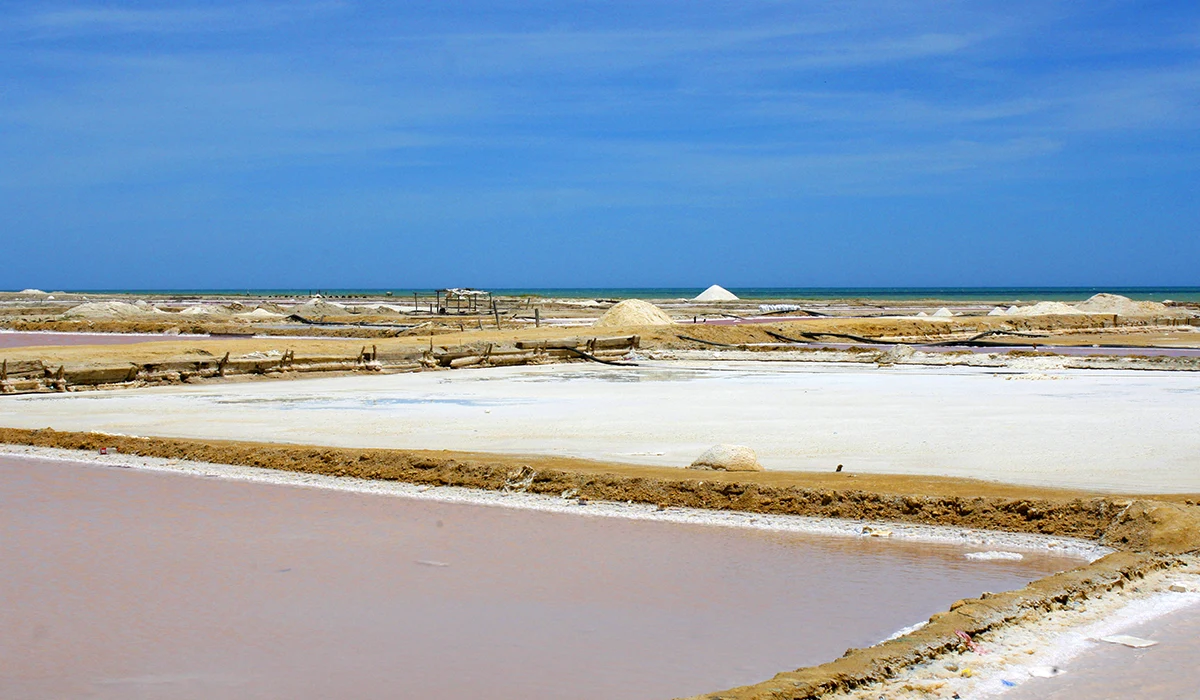
Visiting the Manaure Salt Flats is like stepping into an environment where, as local residents say, “salt is grown under the sun and the wind.” Beyond its visual and photographic appeal, this place represents a space where Wayuu tradition, the local economy, and an ancestral trade that has been passed down from generation to generation coexist as a fundamental part of the territory’s identity.
From a production standpoint, the Manaure Salt Flats make up the most important marine salt complex in Colombia. The process of obtaining salt is completely visible to the visitor: seawater is channeled into large evaporation ponds, where the natural action of the sun and wind allows the liquid to reduce until the salt crystallizes. Subsequently, it is collected and piled into small mountains that contrast with the arid landscape of La Guajira.
Mayapo is one of the most prominent sun and beach destinations in La Guajira, recognized for its peaceful atmosphere and its close relationship with nature tourism. Located a few kilometers from Riohacha, this sector of the coast is characterized by long, light-sand beaches and a generally calm sea, which stretch out openly without major urban interventions, offering an ideal environment for those looking to disconnect from the fast pace of conventional tourism.
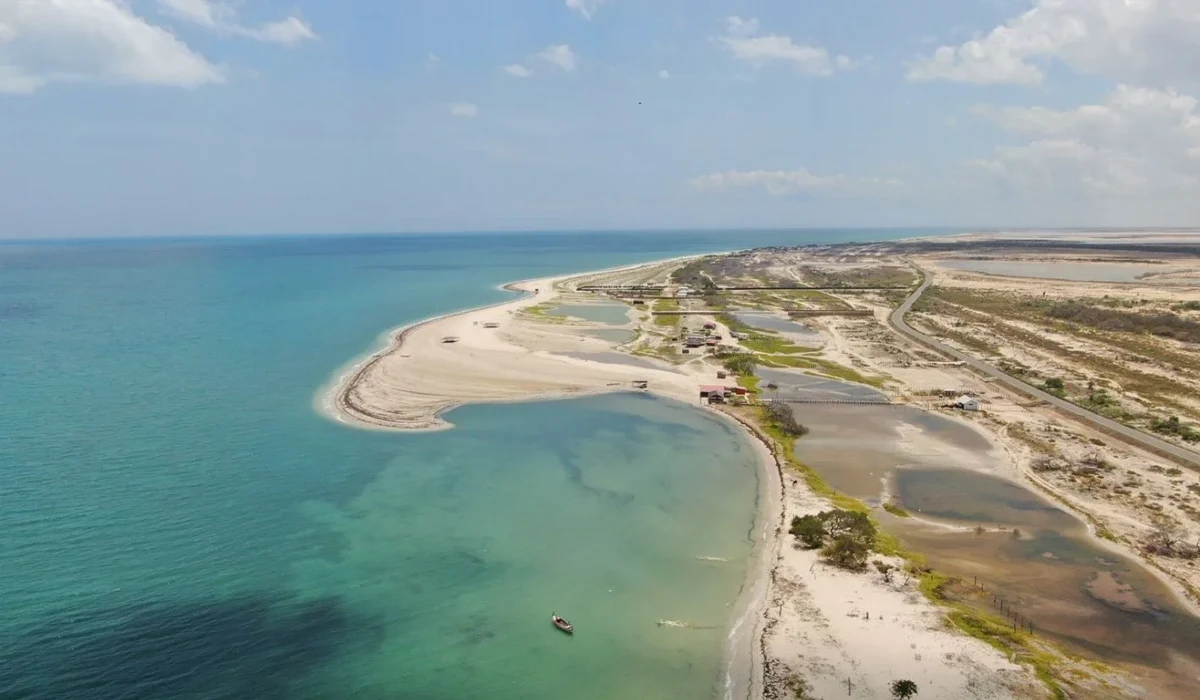
Unlike other more crowded beach destinations, Mayapo preserves a natural and uncrowded atmosphere, where the landscape, the sound of the sea, and the constant wind are the main features. It is a place conducive to rest, walks along the sea, and the practice of gentle water sports, such as kitesurfing in controlled conditions, always in harmony with the environment.
Mayapo also stands out for its focus on responsible and sustainable tourism. Many of the tourist and gastronomic services are managed by Wayuu communities, allowing visitors to support local economies and get to know the culture and traditions of the territory firsthand. This combination of quiet beaches, untouched nature, and community management makes Mayapo an ideal destination for travelers who value authentic experiences in La Guajira.
In the arid tip of Upper Guajira, where the desert meets the Caribbean Sea head-on, lies Cabo de la Vela, a destination that makes an impact with its scenery and the deep cultural meaning it represents. This territory offers a unique combination of rugged cliffs, open beaches, and infinite horizons, becoming one of the most breathtaking places in northern Colombia.
Beyond its natural beauty, Cabo de la Vela holds a fundamental spiritual weight for the Wayuu people, who recognize it as a sacred space within their ancestral worldview. This relationship with the territory is felt in the daily life of the local communities and in the respectful way in which tourist activities are developed.
Among the most visited sites are the Pilón de Azúcar, which offers panoramic views of the coastline; the Cabo de la Vela Lighthouse, ideal for watching sunsets over the desert; and its beaches with constant winds, recognized as ideal settings for kitesurfing. Cabo de la Vela offers a comprehensive experience where landscape, culture, and spirituality are naturally intertwined, leaving a deep impression on those who visit.
At the northernmost tip of the South American continent lies Punta Gallinas, a destination that represents the most adventurous spirit of La Guajira. Reaching this destination is not just a geographical move, but a journey experience, involving crossing open deserts, extensive sand dunes, and Wayuu indigenous territories, where the landscape constantly changes and the journey becomes a fundamental part of the trip.
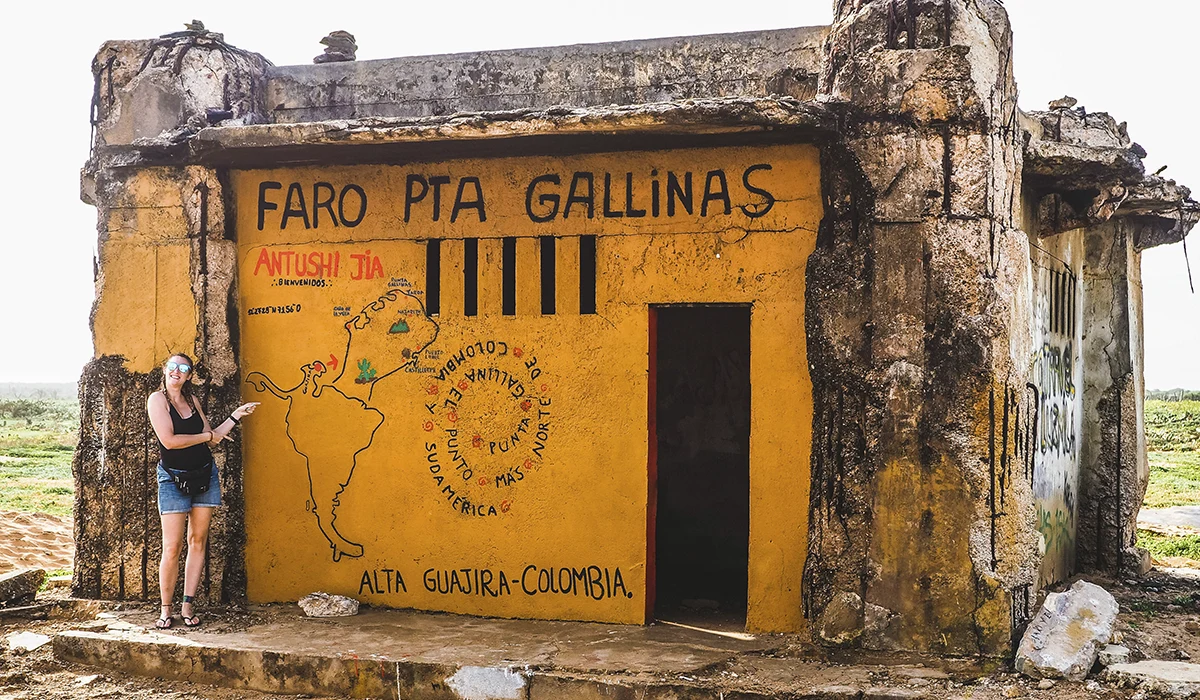
Punta Gallinas is characterized by its isolation, its untouched nature, and the feeling of being at one of the last edges of the continent. Here, the desert meets the Caribbean Sea in scenes of great visual power, marked by the wind, silence, and wide horizons that reinforce the connection with the natural environment.
Among its most representative attractions are the Punta Gallinas Lighthouse, which offers panoramic views of the coastline; the Taroa Dunes, unique in Colombia for their direct drop into the sea; and practically virgin beaches, far from conventional tourist development. All this makes Punta Gallinas an ideal destination for travelers seeking extreme experiences, unique landscapes, and deep contact with nature and the ancestral culture of La Guajira.