
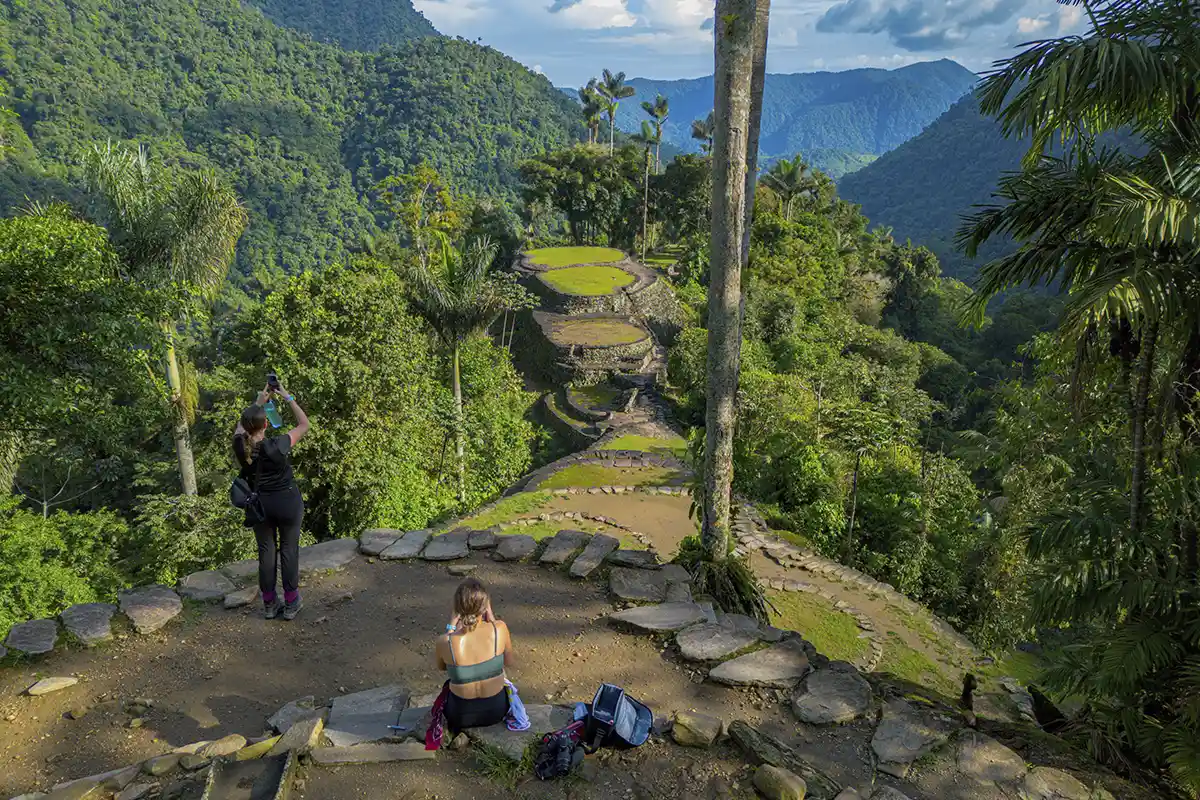
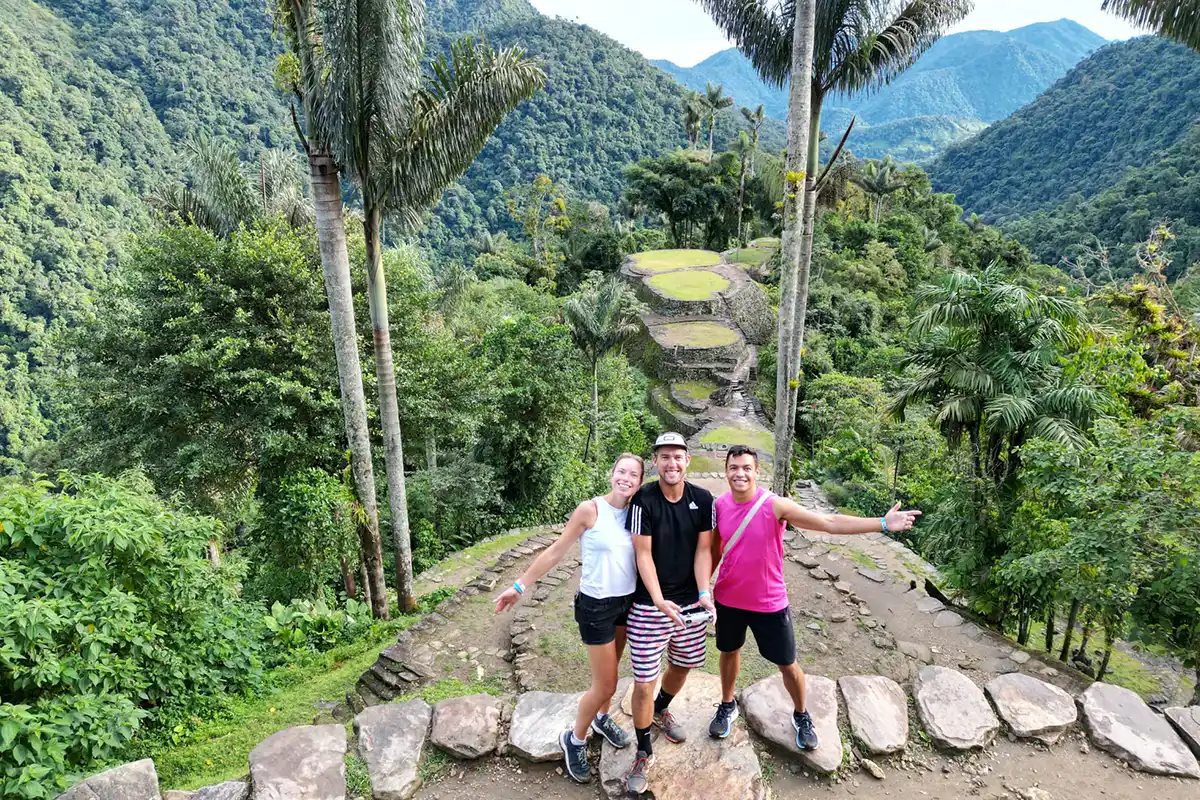
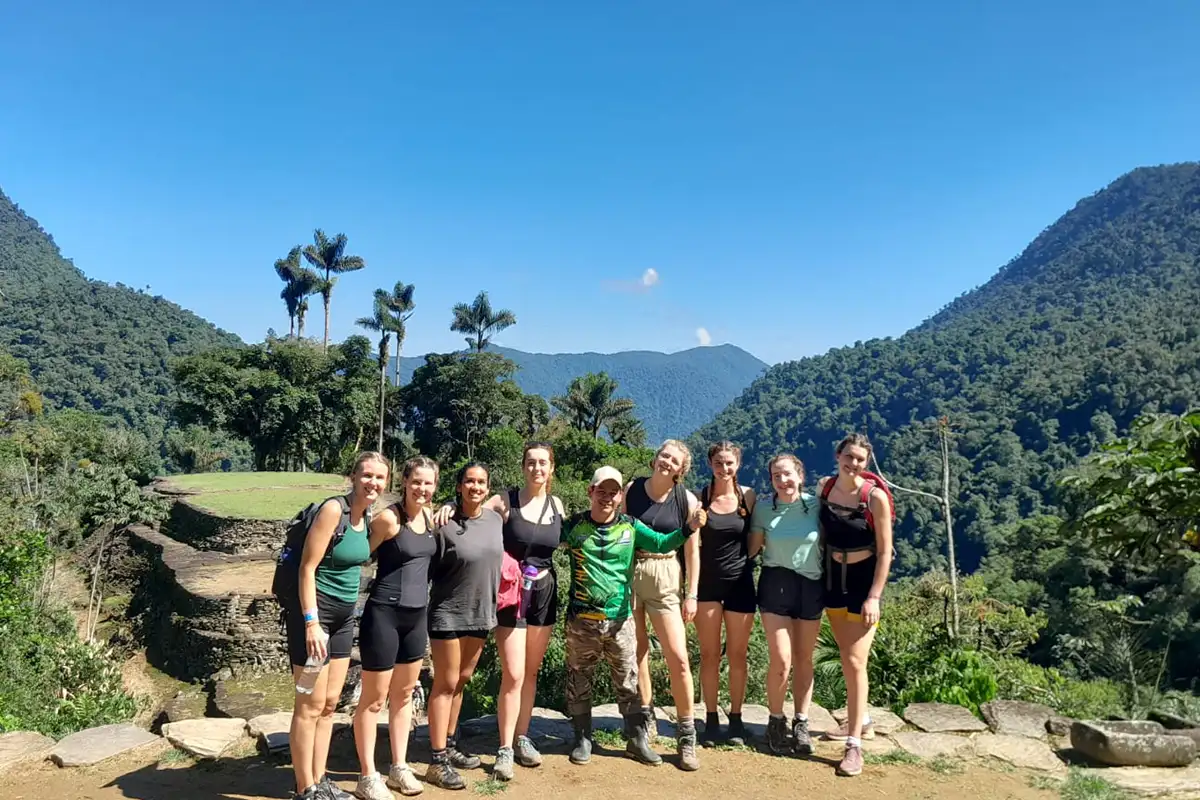
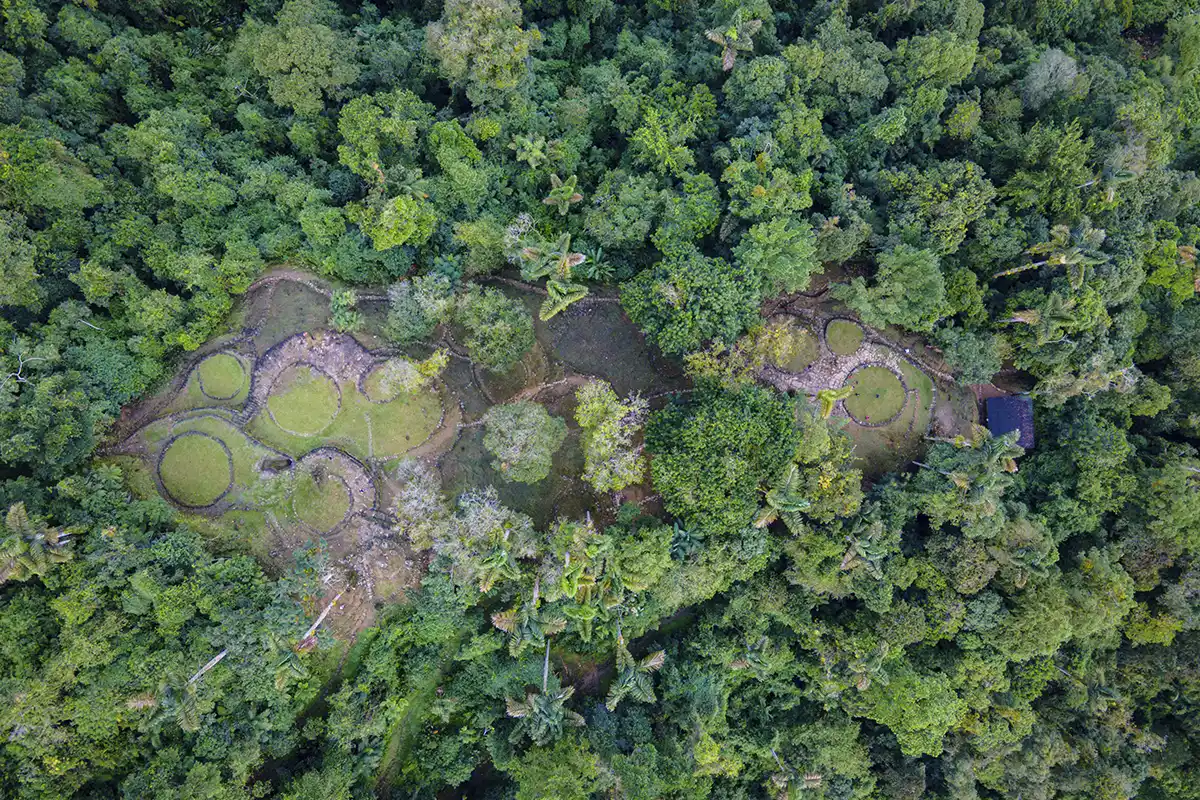
The Lost City Trek Colombia 4 days is considered one of the best treks in South America and one of the most highly recommended experiences in Colombia. The hiking adventure begins in the village of El Mamey, from where an approximately 30 km trek begins through tropical rainforest, crystal-clear rivers, and mountains that will challenge your endurance from the very first stretch.
This Lost City trek offers a total immersion in the nature and indigenous culture of the Sierra Nevada de Santa Marta. It’s not simply walking; it’s entering sacred territory where guides teach you about biodiversity, environmental respect, ancestral practices, stories of the Tayrona people, and the correct way to move through the mountain.
The physical demands of the 4-day Lost City tour are real: humidity, heat, rain, technical descents, and demanding ascents. But the reward is worth it all. The views are stunning, the environment is unique, and the sense of achievement upon reaching the Lost City Teyuna is indescribable. Plus, you’ll experience an authentic cultural connection that remains even after returning to Santa Marta.
If you’re looking for a hiking adventure in Colombia with everything included, clear logistics, full meals, expert guides, and a day-by-day organized itinerary, the 4-day Lost City trek is the perfect choice. An intense, transformative, and purposeful experience that brings you close to one of the country’s most important archaeological sites.
Ready for the challenge? Check available dates and spots for the Lost City tour and secure your place with expert local mountain trekking guides.
Day 1: Santa Marta → El Mamey → Adán Camp
At 8:30 am, tourists meet at Tezhuna Travel agency, some will be picked up from their accommodations to be transferred to the office.
Around 9:30 am, they depart by road in a 4x4 vehicle from Santa Marta heading to the village of El Mamey, located in the foothills of the Sierra Nevada de Santa Marta. The journey takes approximately 3 hours.
In this village, also known as Machete Pelao, tourists will have lunch and receive the first instructions from the guide on itinerary, camps, and the day's hiking pace.
After the briefing, around 1:00 pm, they begin the trek to the Lost City. The journey takes approximately 4 hours to Adán camp, where they'll be assigned accommodation (hammock or bed with mosquito net), then have a hot dinner and free time to shower and prepare their backpack for the next day.
Day 2: Adán Camp → Mumacke Camp → Paso Lorenzo Camp
The second day of the Lost City tour starts very early. At 5:00 a.m. the group has breakfast to recharge energy before facing the most demanding day of the trek: 14.7 kilometers that usually require between 8 and 10 hours of hiking, depending on the group's pace and trail conditions in the Sierra Nevada de Santa Marta.
The key is to maintain a steady pace, hydrate regularly, and listen to the guide's instructions. During the morning trek, strategic stops are made in shaded spots to catch your breath, adjust your backpack, and prepare your body for terrain changes. The trail combines sections of dense jungle, mountain ascents, and river crossings where it's essential to secure your footwear properly and place your feet correctly.
One of the most special moments of the route is passing through Mutanzhi, a Kogui indigenous village that reminds travelers they're walking through sacred, living, and culturally protected territory.
The route continues to Mumacke Camp, where lunch awaits. If weather and river flow permit, you can enjoy a refreshing swim in its crystal-clear waters to revitalize legs and mind before the second part of the journey.
After the break, the group resumes the hike to Paso Lorenzo Camp. This final section takes approximately 4 hours, with sustained climbs and descents where it's wise to watch each step carefully, especially after rain.
Upon arriving at camp, you can bathe in the river, put on dry clothes, and prepare for a hot dinner that feels like a true reward. Accommodation can be in a bed or hammock with mosquito net, depending on availability.
This day is long and physically challenging, humidity increases the sense of effort, but smart breaks, constant hydration, and the guide's support make the experience manageable and deeply rewarding.
Day 3: Paso Lorenzo Camp → Lost City Teyuna → Mumacke Camp
The third day will start very early, tourists will have breakfast to begin the day with energy. They can leave part of their luggage at Paso Lorenzo camp and carry only what's necessary to visit the Lost City.
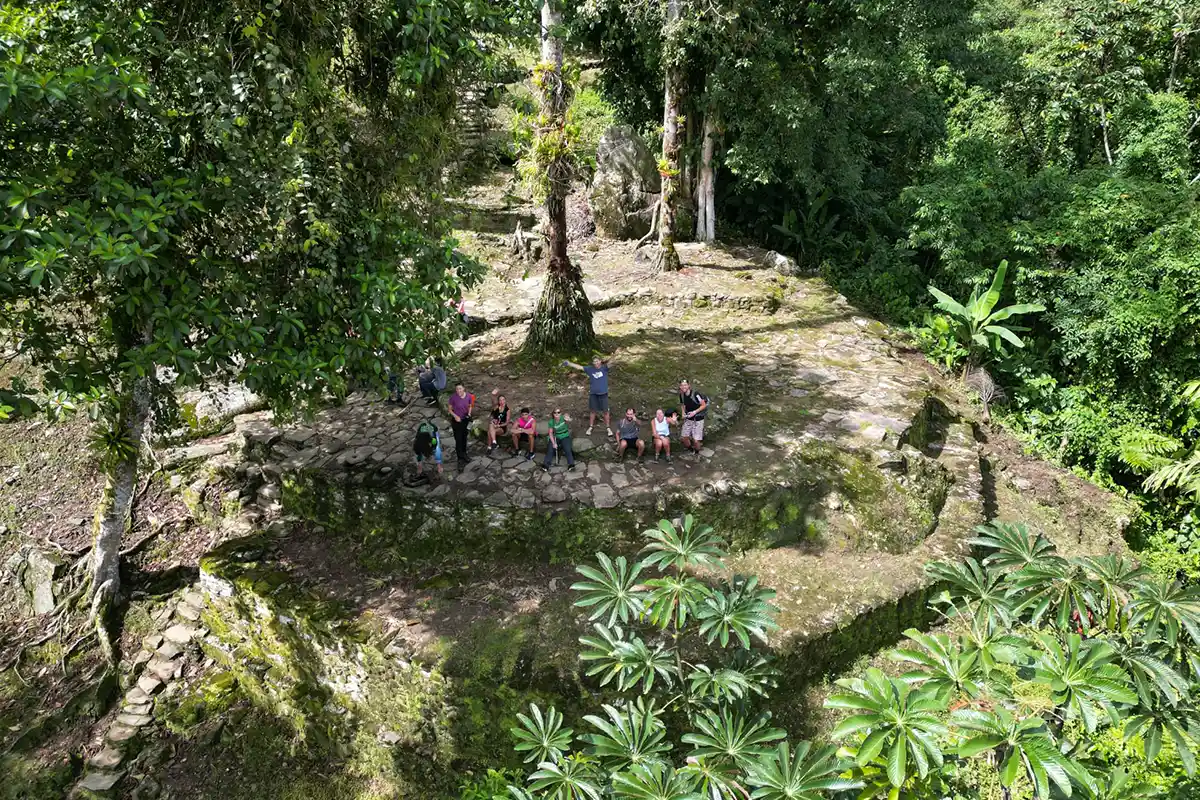
The trek begins along the Buriticá river until reaching the 1,200 stone steps, then tourists start the approximately 1-hour uphill hike that will take them directly to Teyuna's sacred terraces. There, they can take photos, the guide will accompany them through ancestral paths, viewpoints, and ceremonial spaces, sharing stories about the ancient Tayrona, their worldview, and the spiritual meaning of the indigenous territory.
Once they've finished the guided tour of the Lost City archaeological ruins, they'll begin the descent to Paso Lorenzo camp, where they'll have lunch and can reorganize their luggage before continuing the return hike.
After lunch and organizing their backpack, they continue the return to Mumacke Camp, a section of approximately 7.6 kilometers (about 4 hours) through jungle trails, riverside paths, and gentle slopes where it's wise to maintain a steady pace.
Upon arriving at Mumacke camp, they can bathe, change clothes, and enjoy a hot dinner before sleeping. Accommodation is in a bed or hammock with mosquito net, depending on availability.
This day is one of the most memorable of the Lost City tour, as it combines adventure, living history, and the deep satisfaction of having reached the archaeological heart of the Sierra Nevada de Santa Marta.
Day 4: Mumacke Camp → El Mamey → Santa Marta
The last day of the Lost City tour begins early at Mumacke camp, where a good breakfast will help recover energy before the final section of the trek. Before starting the march, the guide will check the group's general condition.
The return hike is on a mixed trail, combining slope sections that can challenge legs already fatigued from previous days. The ideal is to maintain a relaxed pace, breathe deeply, and enjoy the last landscapes of the Sierra Nevada de Santa Marta, an environment that will leave a mark even on the most experienced travelers.
Around midday, the group arrives back at El Mamey, the point where the adventure began. A delicious lunch awaits to recover strength, hydrate, and stretch gently before starting the return trip to Santa Marta.
It's also the perfect moment to change clothes, get some fresh air, and celebrate having completed one of South America's most iconic treks.
Right after, travelers board the 4x4 vehicle that will take them back to Santa Marta. Arrival time is usually between 3:00 p.m. and 5:00 p.m., depending on weather, group pace, and road conditions.
This last day marks the close of a demanding but deeply transformative journey. You'll be left with the satisfaction of having traveled many kilometers of jungle, mountains, rivers, and ancestral paths to reach Colombia's mythical Lost City.
What does the Lost City Trek Colombia consist of?
The Lost City tour is a multi-day trek (3, 4, or 5 days, depending on the plan) that covers between 55 and 60 km round trip, through the Sierra Nevada de Santa Marta to reach the archaeological site of Teyuna, known as the Lost City.
The excursion combines nature, indigenous culture, and physical adventure. It includes full meals, accommodation in camps, local guides, and official permits to enter the sacred territory.
How many days does the Lost City trek last?
The most common routes are 3 days, 4 days, or 5 days, but the 4-day Lost City tour is the most popular because it concentrates the complete route into an intense and well-designed experience. The hike adapts to the group's pace and is always guided by authorized tour guides.
How difficult is the Lost City tour?
The trek has a medium-high difficulty level. It includes long climbs, steep descents, muddy trails, river crossings, and 6 to 8-hour hikes per day. You don't need to be an athlete, but you do need to be in good physical condition and used to walking. The humidity and heat of the Sierra Nevada increase the sense of effort.
What's the best time of year to travel to the Lost City?
It can be done year-round, but the best time is during dry season (December - March and July - August), when trails are firmer. During rainy season, rivers rise and paths become slippery, which increases the difficulty level. However, guides adjust the pace and ensure the group's safety at any time of year.
Where do you sleep during the trek?
Tourist accommodation is in sturdy camps in the Sierra Nevada de Santa Marta created by the indigenous or rural communities of the area. There are two options:
Is the Lost City tour safe?
Yes, it's safe. The route is controlled by indigenous communities and authorized operators. You walk in a group, with experienced tour guides and protocols in case of rain, rising rivers, or fatigue. Additionally, entry is only possible with certified tour operators.
Can I do the Lost City without a guide?
No. Access to the Lost City is prohibited without an authorized operator by the indigenous communities and environmental authorities. The area is sacred territory and requires accompaniment to ensure safety, cultural respect, and environmental protection.
Is it possible to swim in the Buriticá river during the tour?
Yes. Along the route there are rivers and natural pools where travelers can cool off. At almost all camps it's possible to bathe in the river or in cold showers.
What type of food is offered at the camps?
Meals are homemade and abundant: rice, chicken, pasta, fruits, coffee, and natural juices. If you're vegan or vegetarian, you must inform us in advance so logistics can prepare special food options.
Do the camps have internet or cell signal?
During most of the trek there's no cell signal. Some camps offer limited WiFi, although it's not always stable. It's an ideal trip to disconnect.
What risks or difficulties can you have during the Lost City tour?
The main challenges are:
Is the Lost City tour recommended for children or seniors?
It's recommended for people from 14 years old with good physical condition. Seniors can do it as long as they have experience walking long distances and have medical approval.
Can I bring drones or professional equipment?
No. Drone use is prohibited in most of the territory out of respect for indigenous communities and due to environmental regulations. Professional cameras are allowed as long as you don't take photos of indigenous people without permission.
End of form